
High-Speed Angular Contact Bearing Solutions
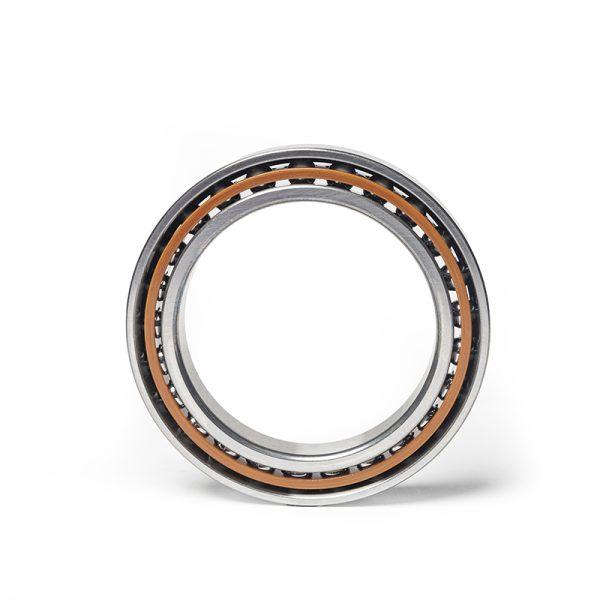
In modern manufacturing, machines operate faster and carry heavier loads than ever before. Standard bearings often struggle when both radial and axial forces act at the same time.
Common problems include:
-
Excessive heat generation
-
Shaft misalignment
-
Premature wear
-
Vibration and noise
-
Frequent maintenance shutdowns
In CNC machines, pumps, turbines, and automotive systems, these failures directly impact productivity and cost.
The Solution: What Is an Angular Contact Bearing?
Intent:
Define the product clearly and build technical understanding for engineers and buyers.*
An angular contact bearing is designed to handle combined radial and axial loads simultaneously. Unlike standard deep groove ball bearings, it has a contact angle between the ball and raceway. This angle allows the bearing to support axial force in one direction while maintaining high-speed capability.
You can explore detailed specifications of angular contact bearing options for industrial applications.
How It Works
The contact angle creates a specific load path inside the bearing. When force is applied:
-
Radial load is supported by the ball rolling motion
-
Axial load is transferred along the contact angle
-
Load distribution remains stable at high speeds
This design increases rigidity and reduces deformation under stress.
Problems with Traditional Bearing Solutions
Intent:
Show limitations of conventional options to highlight the need for specialized solutions.*
Standard radial bearings are not optimized for heavy axial loads. When used incorrectly, they may experience:
-
Uneven load distribution
-
Increased friction
-
Early fatigue failure
-
Reduced rotational accuracy
In high-precision industries such as aerospace or CNC machining, even small deviations can affect product quality.
How Angular Contact Bearing Solves These Issues
An angular contact bearing solves combined load challenges by offering:
-
Optimized contact angles (15°, 25°, 40° options)
-
Higher axial load capacity
-
Greater rigidity
-
Improved speed performance
-
Reduced vibration levels
Paired mounting arrangements (back-to-back or face-to-face) further increase load stability and precision.
Key Features Engineers Should Consider
Performance Features
-
High-speed rotation capability
-
Precision tolerance classes
-
Low friction design
-
Thermal stability
Durability Features
-
High-grade bearing steel
-
Advanced heat treatment
-
Optimized internal geometry
-
Long fatigue life
These features help reduce total cost of ownership by extending service intervals.
Comparison Table – Angular Contact vs Standard Bearings
| Feature | Angular Contact Bearing | Standard Ball Bearing |
|---|---|---|
| Axial Load Capacity | High (One Direction) | Limited |
| Radial Load Capacity | High | High |
| Speed Capability | Very High | Moderate |
| Rigidity | High | Medium |
| Mounting Options | Single / Paired | Single |
| Precision Applications | Excellent | Limited |
For machines that require stiffness and accuracy, angular contact designs offer superior performance.
Real Industrial Applications
Angular contact bearing solutions are widely used in:
-
CNC spindles
-
Automotive transmissions
-
Pumps and compressors
-
Gearboxes
-
Electric motors
-
Aerospace systems
In high-speed spindle systems, precise alignment and minimal vibration are critical. Many manufacturers rely on angular contact bearing configurations to maintain consistent machining accuracy.
Why Manufacturers Prefer Angular Contact Bearings
Industrial buyers value:
-
Reduced downtime
-
Improved machine accuracy
-
Higher load reliability
-
Lower maintenance cost
-
Long operational life
Because these bearings are engineered for combined load performance, they reduce unexpected failures and improve production stability.
How to Choose the Right Angular Contact Bearing
Intent:
Offer practical selection guidance for engineers.*
When selecting a bearing, evaluate:
-
Required contact angle
-
Load magnitude (radial and axial)
-
Operating speed
-
Temperature conditions
-
Precision class (P0, P5, P4, etc.)
-
Mounting arrangement
For high-speed spindles, smaller contact angles are preferred. For heavy axial loads, larger contact angles provide better support.
Proper lubrication and correct installation are also critical to maximize lifespan.
Conclusion
Modern industrial machines demand precision, speed, and durability. Traditional bearing solutions often fail under combined load conditions.
An angular contact bearing delivers the rigidity, axial load capacity, and high-speed performance required for demanding applications. For manufacturers and engineers, investing in the right bearing technology improves:
-
Equipment lifespan
-
Production accuracy
-
Operational efficiency
-
Overall cost control
Selecting the right design today prevents costly downtime tomorrow.

 Arabic
 French
 Spanish
 Portuguese
 Deutsch
 Turkish
 Dutch
Dutch
 Italiano
 Russian
 Romaian
 Portuguese (Brazil)
 Greek
Greek