
The Essential Role of Manual Surgical Tools

Surgeons rely on a vast array of instruments to perform delicate procedures with precision and safety. Among the most fundamental tools in an operating room are those designed to provide optimal visibility and access to the surgical site. While powered and self-retaining tool options exist, the control offered by manual instruments remains irreplaceable for many specific tasks. Understanding the nuances of these tools helps medical professionals choose the right equipment for successful patient outcomes.
Precision and Control in Surgery
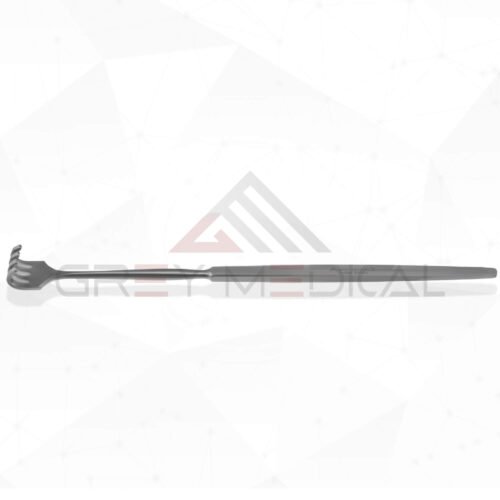
Surgical procedures often require dynamic adjustments that static instruments cannot provide. This is where hand held retractors prove their worth. These instruments allow an assistant or surgeon to actively manipulate tissues, organs, or skin edges to expose the underlying anatomy. The ability to make immediate, subtle adjustments in tension and angle is crucial during complex dissections where tissue viability must be preserved.
Unlike self-retaining mechanisms that lock into place, manual retractors provide tactile feedback. The holder can feel the resistance of the tissue, preventing over-retraction that could lead to ischemia or tissue damage. This sensitivity makes them particularly valuable in delicate surgeries, such as plastic surgery, vascular procedures, or pediatric operations where tissue structures are fragile.
Variety and Application
The design of hand held retractors varies significantly to accommodate different anatomical depths and tissue types. Some feature broad, flat blades for holding back large muscle groups or abdominal organs, while others have fine hooks or rakes for retracting skin edges during superficial procedures. The classic Richardson, Army-Navy, and Senn retractors are staples in surgical trays worldwide, each serving a distinct purpose based on the surgical field's requirements.
Selecting the correct instrument impacts the speed and safety of the operation. A tool that is too small may not provide adequate exposure, forcing the surgeon to struggle for visibility. Conversely, a tool that is too large or aggressive can cause unnecessary trauma. High-quality manufacturing ensures that these instruments maintain their structural integrity and smooth finish, reducing the risk of accidental tissue tears.
Excellence in Manufacturing
Quality is paramount when it comes to surgical instrumentation. GreyMedical® stands out as a privately owned medical technology company dedicated to innovation and excellence in the craft of surgical instruments. Their commitment ensures that surgeons have access to reliable, durable tools that perform consistently under the rigorous demands of the operating room.
When sourcing hand held retractors, hospitals and clinics must prioritize durability and ergonomics. Instruments produced by reputable manufacturers like GreyMedical® are crafted from high-grade stainless steel, ensuring they withstand repeated sterilization cycles without corroding or losing their finish. Furthermore, ergonomic handle designs reduce fatigue for the surgical assistant who may need to hold the retractor in place for extended periods.
The Future of Manual Instrumentation
Despite the rise of robotic and minimally invasive techniques, the demand for high-quality manual tools persists. There will always be a need for the direct, human-controlled exposure that hand held retractors provide. As surgical techniques evolve, so too does the engineering behind these instruments, with companies constantly refining designs to improve grip, reduce glare, and minimize tissue trauma.
Surgeons continue to train with these fundamental tools, mastering the art of exposure that is critical to surgical success. The partnership between skilled hands and precision instruments remains the cornerstone of effective medical intervention.
Conclusion
The importance of reliable surgical exposure cannot be overstated. hand held retractors remain a vital component of the surgical toolkit, offering unmatched control and feedback during procedures. By choosing high-quality instruments from dedicated manufacturers like GreyMedical®, healthcare providers ensure that their surgical teams are equipped to deliver the highest standard of care. Investing in superior instrumentation is ultimately an investment in patient safety and surgical excellence.

 English
 Arabic
 French
 Spanish
 Deutsch
 Turkish
 Dutch
Dutch
 Italiano
 Russian
 Romaian
 Portuguese (Brazil)
 Greek
Greek