
Drugs Based on Genetic Engineering Market to Reach USD 459.6 Billion by 2034, Growing at a 7.4% CAGR (2026–2034)
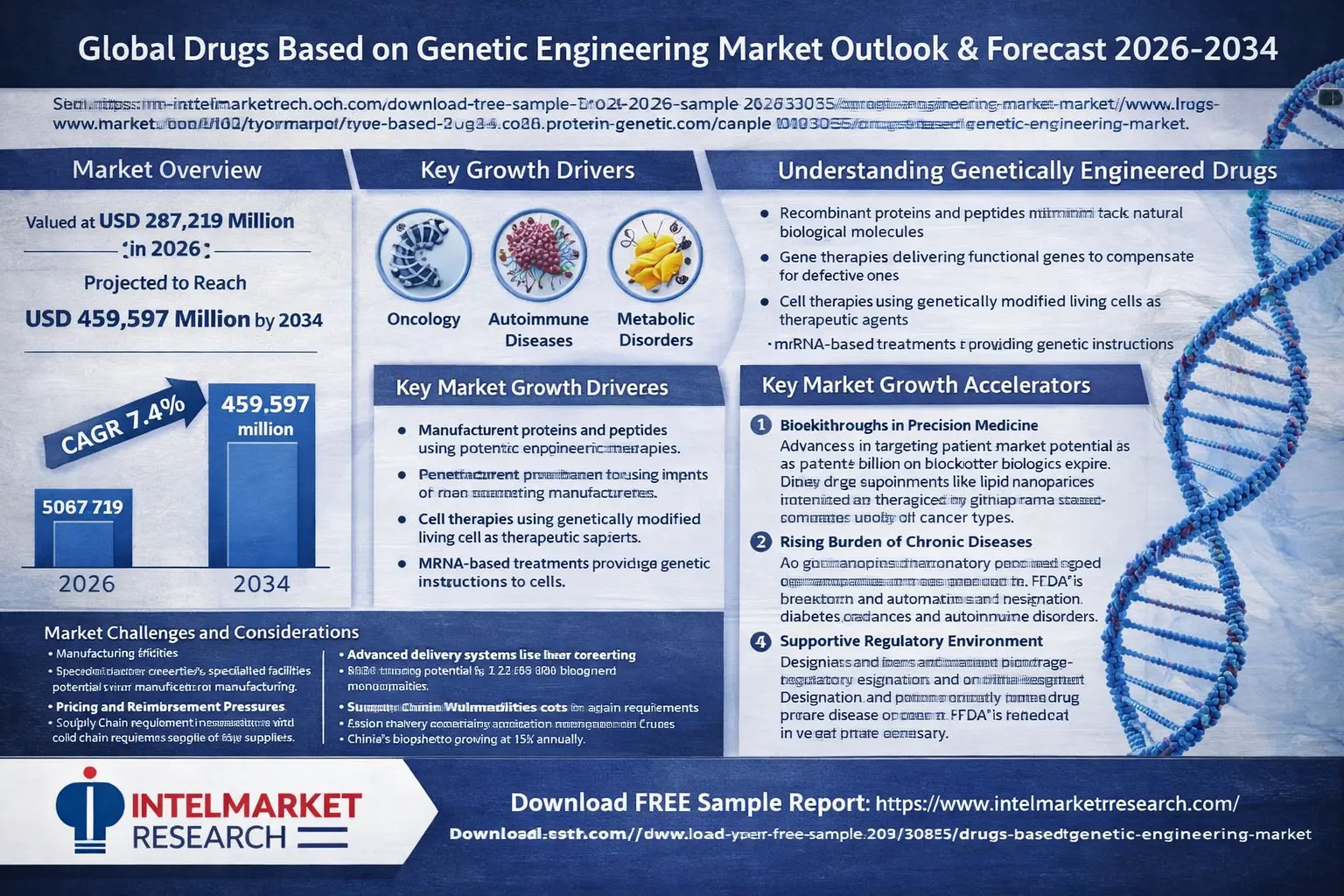
According to a new report from Intel Market Research, Global Drugs based on Genetic Engineering market was valued at USD 287,219 million in 2026 and is projected to reach USD 459,597 million by 2034, growing at a CAGR of 7.4% during the forecast period (2026-2034). This expansion reflects the growing adoption of genetically engineered therapeutics across oncology, autoimmune diseases, and metabolic disorders.
📥 Download FREE Sample Report: https://www.intelmarketresearch.com/download-free-sample/30585/drugs-basedgenetic-engineering-market
Understanding Genetically Engineered Drugs
Drugs developed through genetic engineering represent a revolutionary leap in precision medicine. These biopharmaceutical products utilize technologies like recombinant DNA, gene editing, and synthetic biology to create targeted therapies that interact with specific genetic pathways. Unlike conventional small-molecule drugs, these advanced therapies can precisely modify disease processes at the molecular level, offering superior efficacy for complex conditions.
The market encompasses innovative treatment modalities including:
-
Recombinant proteins and peptides that mimic natural biological molecules
-
Gene therapies delivering functional genes to compensate for defective ones
-
Cell therapies using genetically modified living cells as therapeutic agents
-
mRNA-based treatments providing genetic instructions to cells
This report delivers a 360-degree analysis of the market landscape—from macro trends shaping industry growth to micro-level insights on technological advancements, regulatory landscapes, and competitive dynamics. It serves as an essential resource for biopharma executives, investors, and healthcare policymakers seeking to navigate this complex but high-growth sector.
Market Challenges and Considerations
-
Manufacturing Complexities - Biologic production requires specialized facilities and rigorous quality control, with viral vector manufacturing capacity particularly constrained globally
-
Pricing and Reimbursement Pressures - High development costs (average $2.5 billion per approved therapy) lead to premium pricing models that challenge healthcare budgets
-
Supply Chain Vulnerabilities - Cold chain requirements and single-source suppliers create logistical challenges for temperature-sensitive biologics
Emerging Opportunities
The next wave of growth will likely come from:
-
Biosimilar development as patents expire on blockbuster biologics, creating $150+ billion market potential
-
Advanced delivery systems like lipid nanoparticles improving gene therapy efficacy and safety
-
Asian market expansion, with China's biopharma sector growing at 15% annually
Key Market Growth Accelerators
1. Breakthroughs in Precision Medicine
Advances in genomics and proteomics have enabled new therapeutic approaches targeting specific patient subpopulations. The FDA approved 15 new cell and gene therapies in 2023 alone, demonstrating the rapid clinical translation of genetic engineering technologies. Biomarker-guided treatments now achieve response rates up to 80-90% in certain cancer types, compared to 30-40% for conventional therapies.
2. Rising Burden of Chronic Diseases
Increasing prevalence of conditions like diabetes (affecting 537 million adults globally) and autoimmune disorders (impacting 4-5% of populations worldwide) drives demand for advanced treatments. Genetically engineered biologics show particular promise in managing these complex, multi-factorial diseases by targeting underlying pathological mechanisms rather than just symptoms.
3. Supportive Regulatory Environment
Regulatory agencies have implemented expedited pathways like the FDA's Breakthrough Therapy Designation, reducing development timelines by 2-3 years. Simultaneously, orphan drug incentives stimulate investment in rare disease treatments, with over 40% of recent approvals targeting conditions affecting fewer than 200,000 patients.
📘 Get Full Report Here: https://www.intelmarketresearch.com/download-free-sample/30585/drugs-basedgenetic-engineering-market
Regional Market Dynamics
-
North America: Commands leadership with 45% market share, supported by robust R&D infrastructure and favorable reimbursement
-
Europe: Strong academic-industry collaborations drive innovation, though pricing pressures moderate growth
-
Asia-Pacific: Fastest-growing region (+12% CAGR) led by China, Japan and South Korea's expanding biotech sectors
Technology Segmentation
By Platform Technology
-
Recombinant DNA Technology
-
Gene Editing (CRISPR, TALENs, ZFNs)
-
mRNA Technology
-
Synthetic Biology
By Therapeutic Area
-
Oncology
-
Autoimmune Diseases
-
Metabolic Disorders
-
Infectious Diseases
Competitive Landscape
The market features a mix of established biopharma leaders and innovative biotechs:
-
Novo Nordisk (Diabetes/obesity therapeutics)
-
Amgen (Autoimmune and inflammatory drugs)
-
Roche (Oncology and rare disease treatments)
-
Emerging players like CRISPR Therapeutics and Editas Medicine pioneering gene editing applications
📥 Download FREE Sample Report: https://www.intelmarketresearch.com/download-free-sample/30585/drugs-basedgenetic-engineering-market
About Intel Market Research
Intel Market Research is a leading provider of strategic intelligence, offering actionable insights in biotechnology, pharmaceuticals, and healthcare infrastructure. Our research capabilities include:
-
Real-time competitive benchmarking
-
Global clinical trial pipeline monitoring
-
Country-specific regulatory and pricing analysis
-
Over 500+ healthcare reports annually
Trusted by Fortune 500 companies, our insights empower decision-makers to drive innovation with confidence.
🌐 Website: https://www.intelmarketresearch.com
📞 Asia-Pacific: +91 9169164321
🔗 LinkedIn: Follow Us

 Arabic
 French
 Spanish
 Portuguese
 Deutsch
 Turkish
 Dutch
Dutch
 Italiano
 Russian
 Romaian
 Portuguese (Brazil)
 Greek
Greek