Seeing Beyond: The Semiconductor Core of AR and VR Smart Glasses
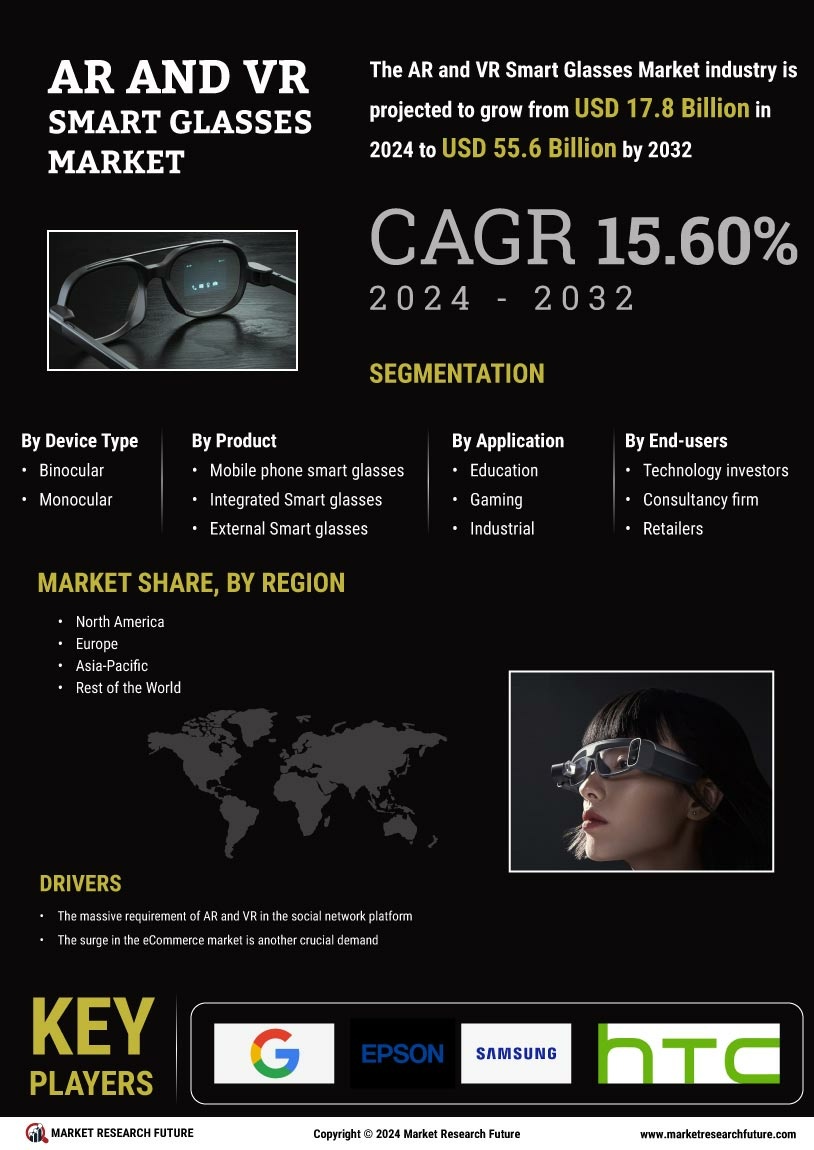
The way we interact with digital information is on the cusp of a profound transformation, moving beyond flat screens and into our physical world. At the forefront of this shift are AR and VR Smart Glasses, wearable devices that promise to seamlessly blend virtual content with reality or transport us entirely to immersive digital realms. These sleek, powerful spectacles are not just futuristic gadgets; they are intricate computing platforms, their very existence and capabilities built upon the relentless innovation of the semiconductor industry.
Read More>
https://www.marketresearchfuture.com/reports/ar-vr-smart-glasses-market-4837
What Are AR and VR Smart Glasses?
Augmented Reality (AR) Smart Glasses overlay digital information, such as directions, notifications, or interactive 3D models, directly onto our view of the real world. Imagine walking down the street and seeing virtual arrows guiding you to your destination, or a technician having digital repair instructions floating in front of them as they work on complex machinery. Virtual Reality (VR) Smart Glasses, on the other hand, fully immerse the user in a simulated environment, blocking out the real world to create completely digital experiences, from gaming to virtual meetings and training simulations.
Both technologies require incredibly powerful yet miniaturized components to deliver high-resolution visuals, track user movements, and process complex data in real-time, all within a comfortable, wearable form factor. This is where the semiconductor industry plays its most critical role.
The Semiconductor Brains and Eyes
The sophisticated functionality of AR and VR smart glasses is almost entirely dependent on advanced semiconductor technology.
Processors: High-performance, low-power system-on-a-chip (SoC) solutions are the brains, responsible for rendering complex 3D graphics, running AI algorithms for environmental understanding, and managing all device operations.
Displays: Ultra-compact, high-resolution micro-displays (like micro-OLED or LCoS) are essential for projecting clear, vibrant images directly into the user's field of view. These tiny displays require highly integrated semiconductor drivers.
Sensors: A multitude of sensors—accelerometers, gyroscopes, magnetometers, cameras, and depth sensors—continuously track the user's head and eye movements, hand gestures, and the surrounding environment. These semiconductor-based sensors provide the critical data needed for accurate positional tracking and intuitive interaction.
Connectivity: High-speed, low-latency wireless communication chips enable seamless connection to other devices, the cloud, and other users.
The ongoing challenge is to pack all this processing power and sensing capability into a lightweight, stylish form factor that can run for hours on a small battery. This miniaturization and efficiency are the direct result of semiconductor advancements.
Seeing Beyond: The Semiconductor Core of AR and VR Smart Glasses
The way we interact with digital information is on the cusp of a profound transformation, moving beyond flat screens and into our physical world. At the forefront of this shift are AR and VR Smart Glasses, wearable devices that promise to seamlessly blend virtual content with reality or transport us entirely to immersive digital realms. These sleek, powerful spectacles are not just futuristic gadgets; they are intricate computing platforms, their very existence and capabilities built upon the relentless innovation of the semiconductor industry.
Read More> https://www.marketresearchfuture.com/reports/ar-vr-smart-glasses-market-4837
What Are AR and VR Smart Glasses?
Augmented Reality (AR) Smart Glasses overlay digital information, such as directions, notifications, or interactive 3D models, directly onto our view of the real world. Imagine walking down the street and seeing virtual arrows guiding you to your destination, or a technician having digital repair instructions floating in front of them as they work on complex machinery. Virtual Reality (VR) Smart Glasses, on the other hand, fully immerse the user in a simulated environment, blocking out the real world to create completely digital experiences, from gaming to virtual meetings and training simulations.
Both technologies require incredibly powerful yet miniaturized components to deliver high-resolution visuals, track user movements, and process complex data in real-time, all within a comfortable, wearable form factor. This is where the semiconductor industry plays its most critical role.
The Semiconductor Brains and Eyes
The sophisticated functionality of AR and VR smart glasses is almost entirely dependent on advanced semiconductor technology.
Processors: High-performance, low-power system-on-a-chip (SoC) solutions are the brains, responsible for rendering complex 3D graphics, running AI algorithms for environmental understanding, and managing all device operations.
Displays: Ultra-compact, high-resolution micro-displays (like micro-OLED or LCoS) are essential for projecting clear, vibrant images directly into the user's field of view. These tiny displays require highly integrated semiconductor drivers.
Sensors: A multitude of sensors—accelerometers, gyroscopes, magnetometers, cameras, and depth sensors—continuously track the user's head and eye movements, hand gestures, and the surrounding environment. These semiconductor-based sensors provide the critical data needed for accurate positional tracking and intuitive interaction.
Connectivity: High-speed, low-latency wireless communication chips enable seamless connection to other devices, the cloud, and other users.
The ongoing challenge is to pack all this processing power and sensing capability into a lightweight, stylish form factor that can run for hours on a small battery. This miniaturization and efficiency are the direct result of semiconductor advancements.




 Arabic
 French
 Spanish
 Portuguese
 Deutsch
 Turkish
 Dutch
Dutch
 Italiano
 Russian
 Romaian
 Portuguese (Brazil)
 Greek
Greek